The Clinical World
Explore The Protocol: Multi-Acid Peels
How controlled acid matrices help refine texture, improve the look of tone and clarity, and support low-downtime professional peel protocols.
Multi-acid peels are one of the clearest expressions of professional skincare discipline. Rather than relying on a single exfoliating active, they use several acids in concert to create a more calibrated response. The idea is not intensity for its own sake. It is specificity: matching the acid profile to the concern, the skin condition, and the desired level of visible refinement.
Why Multi-Acid Blends Work
Each acid contributes something slightly different to the overall matrix. Alpha hydroxy acids such as glycolic and lactic acid are often associated with surface exfoliation and a smoother-looking finish, while salicylic acid is particularly valued in oily or blemish-prone contexts because of its keratolytic and comedolytic behavior. Mandelic, citric, kojic, and pyruvic acids are frequently included to shape the peel's tone, texture, and brightness profile.
That blend logic matters because skin concerns rarely arrive one at a time. A patient may present with congestion and dullness, or uneven tone and rough texture, or acne-prone skin that still needs a more refined visual finish. A multi-acid format gives the practitioner a broader but still controlled instrument.
Matching the Matrix to the Skin Concern
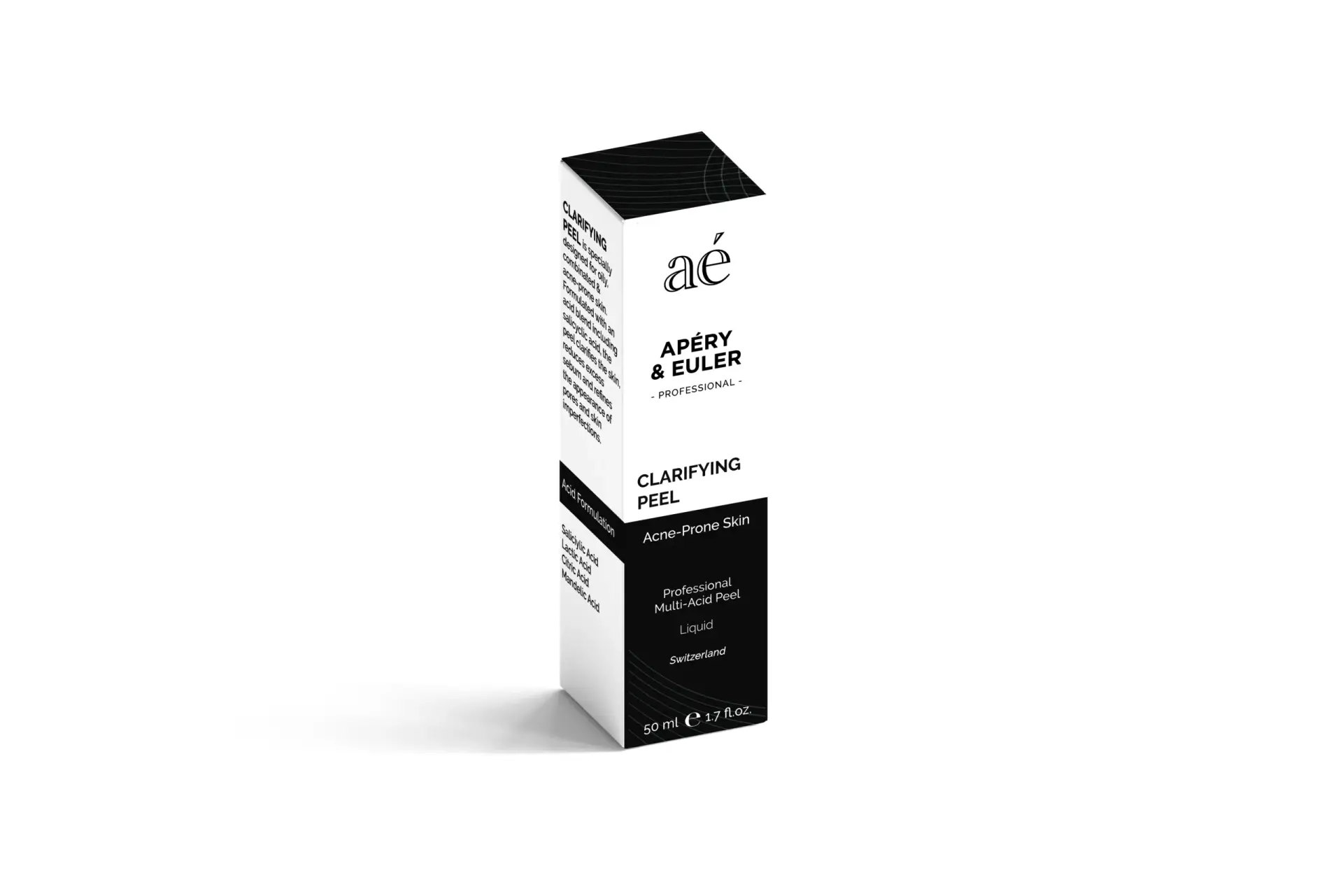
The Apéry & Euler brochure makes this approach easy to read. Clarifying Peel is positioned for oily, mixed, and acne-prone skin, with an acid profile that includes salicylic, lactic, mandelic, and citric acid. The overall impression is one of controlled clarity: helping the skin appear cleaner, less congested, and more refined without treating aggression as a virtue.
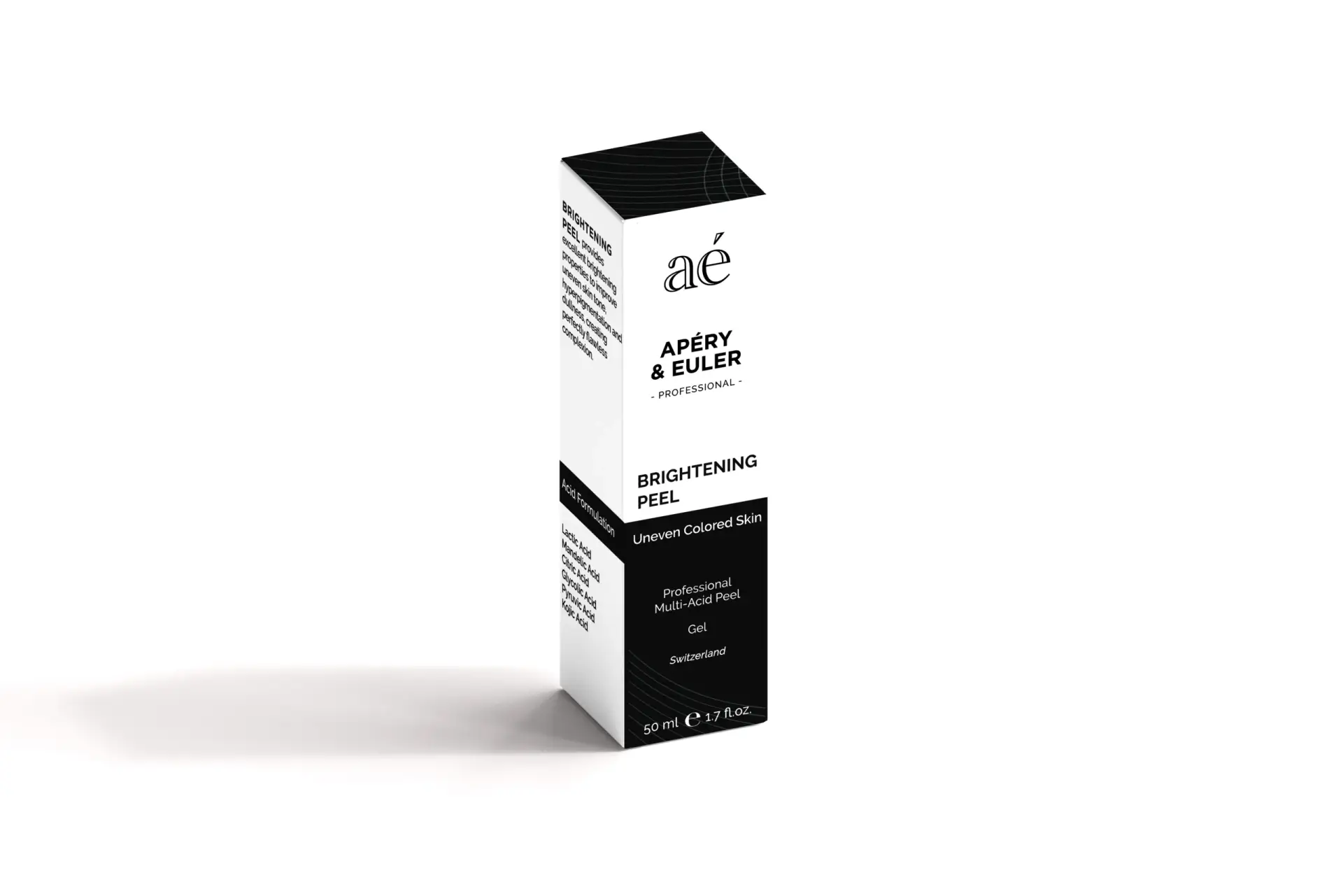
Brightening Peel moves in a different direction. Its blend of glycolic, kojic, mandelic, lactic, citric, and pyruvic acids is framed around uneven tone, spots, and dullness. In editorial terms, it is the luminosity protocol: a peel architecture intended to help the skin look clearer, more even, and more polished over a series of treatments.
The Superficial Peel Advantage
The brochure repeatedly emphasizes the superficial nature of the peel line, along with simple application, low trauma, and limited downtime. That aligns with how many modern clinics want peel protocols to behave. The most desirable result is not dramatic visible shedding. It is a measured degree of activity that refines the skin while allowing the patient to return to daily life with minimal disruption.
That also matches the broader guidance around chemical peel safety. Factors like concentration, pH, formula design, application time, and professional oversight all shape the end result. A good superficial peel is not casual. It is carefully controlled.
What Results Can Realistically Be Discussed
Multi-acid peels are best described in cosmetic, visible terms. They can help the skin look smoother, brighter, and more even in tone. They may support a clearer-looking surface, help soften the look of post-blemish marks, and contribute to a more refined perception of pores and texture over time. Those are meaningful claims, and they are strong enough on their own.
What gives these protocols their premium quality is not oversized language. It is the precision of the outcome. Skin that looks cleaner, more composed, and more luminous is often exactly what a patient wants from a peel.
Protocol, Aftercare, and Professional Supervision
The treatment does not end with application. Peel success depends on selection, timing, spacing, and aftercare. Skin tolerance, exposure habits, seasonality, and the surrounding home-care routine all shape the protocol. That is why professionally supervised peels continue to matter. The peel may be superficial, but the judgment behind it is anything but superficial.
Seen this way, Apéry & Euler's multi-acid peel story feels especially coherent. One protocol is tuned for clarity, one for radiance, and both are built around a disciplined idea of change: visible improvement with low drama, polished execution, and a finish that still looks calm.
Source Note
Local materials used: Brochures/Apery Euler Brochure.txt and the “The Clinical World” section in Pages/Home Page/Gamma/home_page_gamma.html.