The Clinical World
Explore The Protocol: SP[AI]3 and Growth Factors
A careful look at smart peptides, growth factors, and how much can be said confidently about skin health when branded innovation meets published evidence.
SP[AI]3 and growth factors sit in a category of skincare language that immediately sounds advanced. That can be useful, but it also requires discipline. Some of the strongest protocol writing happens when a brand is willing to distinguish clearly between what is described in its own materials and what is supported by broader published literature. That is the most productive way to approach this subject.
What the Brand Materials Say
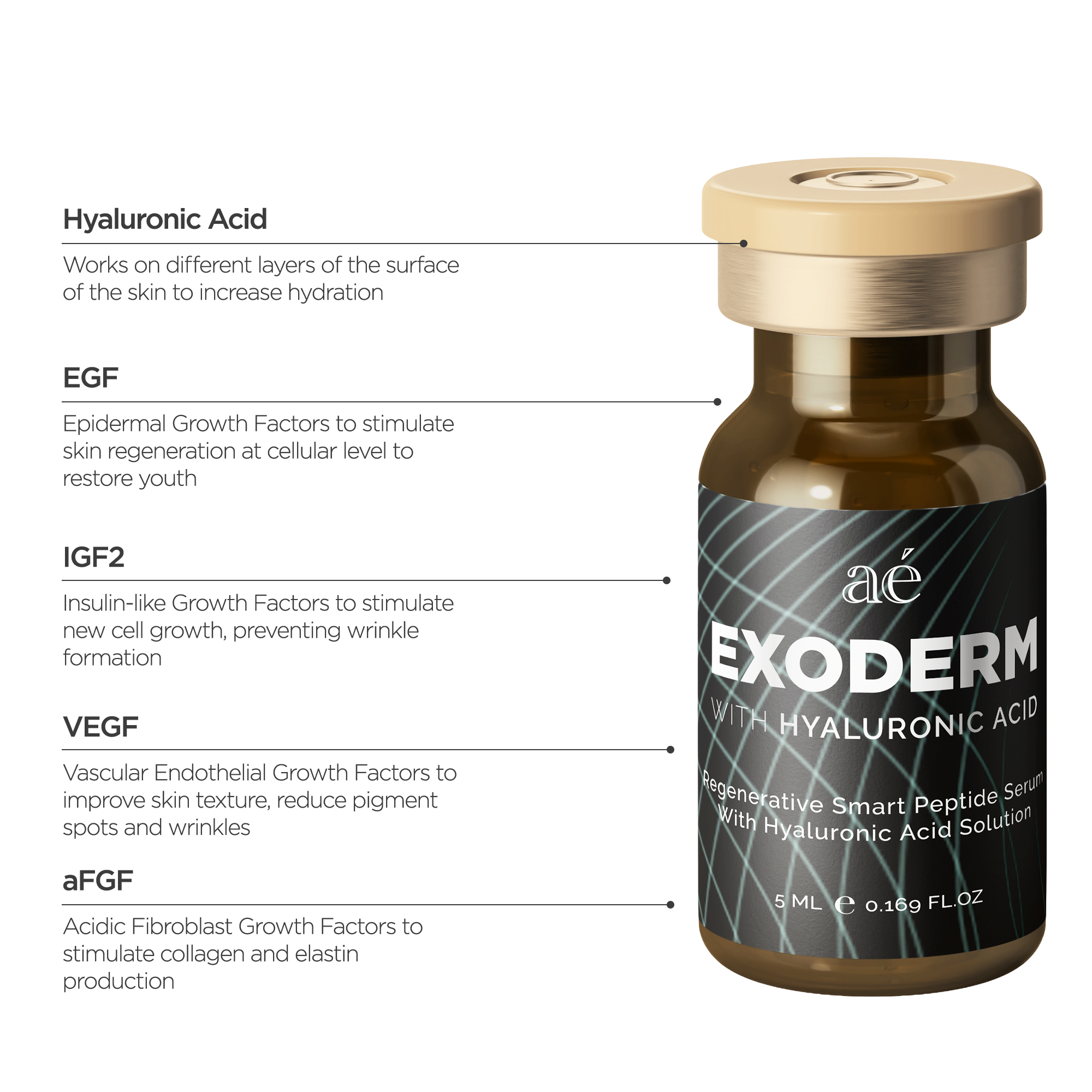
In the local Exoderm description, SP[AI]3 is presented as a smart peptide technology paired with growth factors and hyaluronic acid to support hydration, revitalization, and visible refinement. The product language suggests a multifaceted role: smoother texture, improved suppleness, and a more youthful-looking finish. That framing is coherent inside a cosmetic protocol. It positions the complex as support for skin quality rather than as a claim of medical repair.
Public independent information on SP[AI]3 itself appears limited. One supplier page associates the name with an AI-optimized peptide concept focused on pores, inflammation, and sebum, but that is not enough on its own to build a broad evidence case. So the most honest path is to treat the branded complex as a proprietary platform described by the brand, then contextualize it using the broader literature on topical peptides and growth factors.
What the Research Says About Peptides
Topical peptides are of great interest in cosmetic dermatology because they can function as signaling molecules, carrier systems, or other skin-support ingredients, and reviews suggest they may help improve the appearance of fine lines, elasticity, texture, and visible skin ageing. At the same time, the literature also points out real limitations, especially around penetration and formulation stability. In other words, peptides are promising, but not magically exempt from the practical challenges of topical delivery.
That tension matters because it keeps the conversation realistic. A peptide-led formula can be sophisticated and worthwhile without being overstated. The most defensible promise is visible support for skin quality, not exaggerated certainty.
What the Research Says About Growth Factors
Growth factors are similarly intriguing. A recent systematic review found that topical growth factor preparations appear to offer modest improvements in skin texture, fine lines, wrinkles, and overall facial appearance, with a generally low risk of adverse events. That is encouraging, but it is not a blank cheque for overclaiming. The review also emphasizes the heterogeneity of products and the limits of standardization across studies.
That nuance is useful. It allows a protocol to frame growth factors as part of a measured rejuvenation strategy: ingredients that may contribute to a smoother, more refined appearance, especially when used consistently and formulated thoughtfully.
Why This Combination Is Appealing in Skin Health Protocols
Peptides and growth factors are especially attractive together because they suggest layered communication within the skin-support story. Peptides are often discussed as instructive or signaling ingredients, while growth factors are tied to renewal-oriented narratives. When combined with hydration support, as in Exoderm's materials, the overall protocol identity becomes easier to understand. The aim is to help skin look more rested, more supple, and better balanced after stress or over time.
That is a meaningful cosmetic outcome. It is also a responsible one. We can talk confidently about improved feel, visible refinement, and the appearance of healthier skin without pretending the evidence is stronger or more uniform than it is.
Why Restraint Strengthens the Story
The luxury-clinical audience does not need noise. It needs clarity. SP[AI]3 and growth factors are most compelling when they are presented as part of an intelligent, hydration-aware, recovery-aware skin protocol. The science is promising. The branded story is distinctive. But the strongest editorial position is still one of disciplined confidence rather than excess.
That makes the protocol more believable and, ultimately, more premium. When innovation is communicated with restraint, it feels less like advertising and more like care.
Source Note
Local material used: Brochures/Exoderm Description.rtf. Public information on the exact branded complex is limited; this article combines brand description with broader peptide and growth-factor literature.